
Providing an Exceptional, Sustainable, and Diverse Dining Experience
One Meal at a Time

Menus
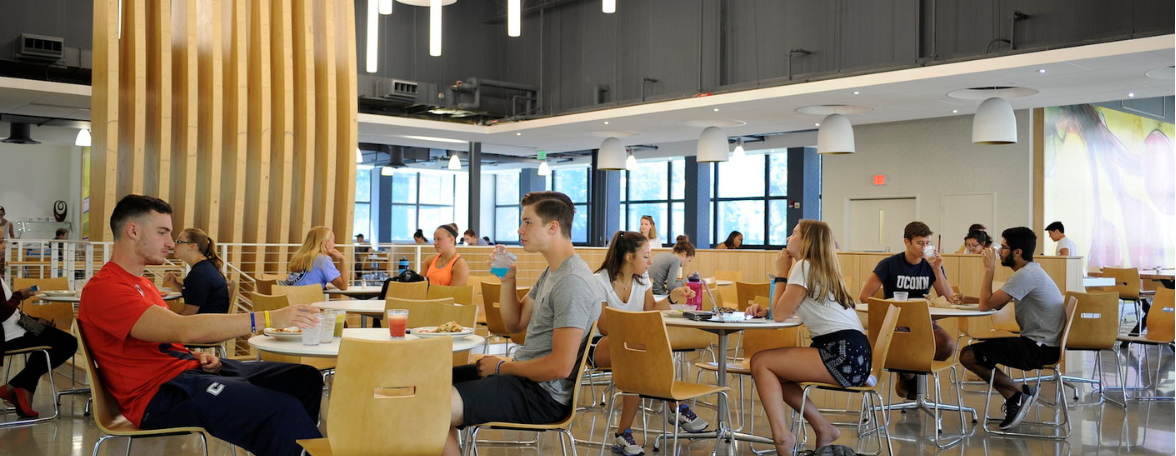
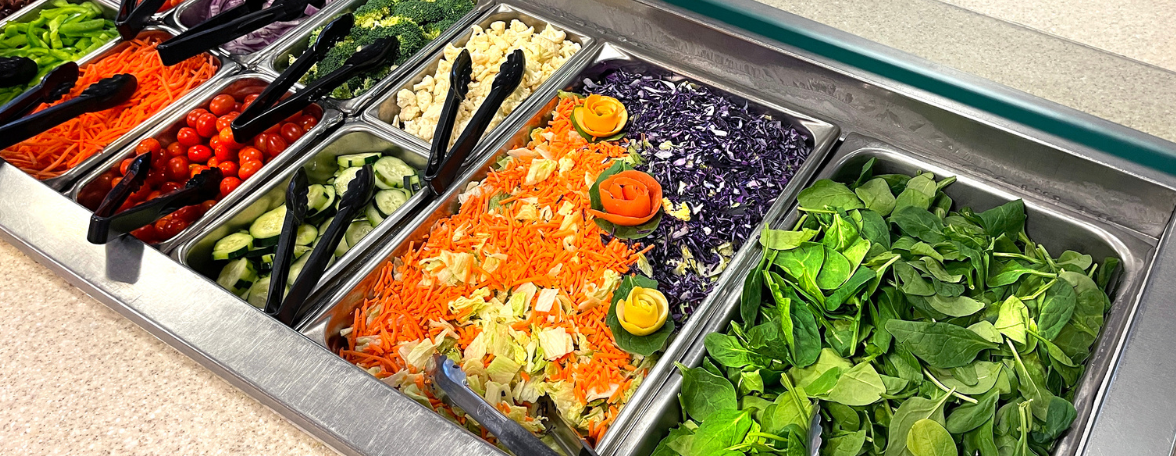
View our comprehensive daily menu offerings for all locations. Includes nutrition information!
Menus
Meal Plans
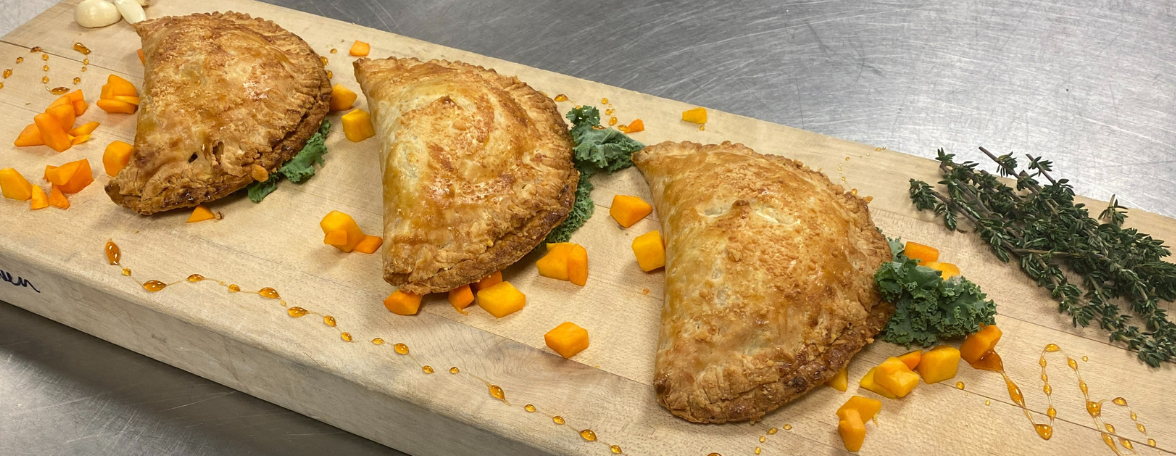
Meal plan options and online forms for UConn Storrs and our regional campuses.
Meal Plans
News & Updates
Husky Harvest Updates/Wish List

Labor Day Weekend 2026 Dining Hours
DINING HOURS FOR SEPT 5-7, 2026
DINING HALLS
September 5th & 6th
All dining halls are open their normal hours.
Monday, September 7th (Labor Day)
- Breakfast: 7-10:30am – South open
- Lunch: 10:30am-2:15pm – All dining halls open.
- Dinner: 4-7:15pm – All dining halls open
- South & Northwest open until 10pm for late night dining.
RETAIL LOCATIONS
| Sunday, 9/6 | Monday, 9/7 | |
| Union Street Market | 11:30am-9pm | 11:30am-9pm |
| Market Cafe | 10am-4pm | 10am-4pm |
| Earth, Wok & Fire | CLOSED | CLOSED |
| SAMBAZON | 10am-4pm | 10am-4pm |
| The Coop | CLOSED | 11:30am-7pm |
| Convenience Store | Noon-9pm | Noon-9pm |
| Food Truck | CLOSED | CLOSED |
| Bookworms Cafe | CLOSED | CLOSED |
| Beanery Cafe | CLOSED | CLOSED |
| CrossRoads Cafe | CLOSED | CLOSED |
| nanoByte Cafe | CLOSED | CLOSED |
| Mango | 11am-4pm | 11am-7pm |
| Dairy Bar | 11am-9pm | 11am-9pm |
| Law School Cafe | CLOSED | CLOSED |
| Avery Point – Mort’s Cafe | CLOSED | CLOSED |
| Hartford Times Cafe | CLOSED | CLOSED |
Dining Services Earns Gold in NACUFS Nutrition Awards for Special Diet Recipe
 STORRS, Conn. — The University of Connecticut Department of Dining Services has been awarded Gold in the National Association of College & University Food Services (NACUFS) Nutrition Awards in the category of Special Diet Recipe of the Year.
The nationally recognized award celebrates innovative collegiate dining recipes that support students with dietary restrictions and lifestyle preferences while delivering exceptional flavor and nutrition. NACUFS honors institutions that create inclusive dining experiences and meet the evolving needs of today’s student population.
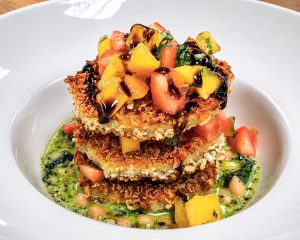
UConn Dining Services earned the distinction for its “Eggplant Stacker with Creamy Pesto Beans and Balsamic Gastrique,” a vegetarian and gluten-free dish that quickly became a student favorite after being introduced at McMahon Dining Hall.
The recipe features crispy, gluten-free breaded eggplant layered with bruschetta-style tomatoes, creamy pesto cannellini beans, Parmesan cheese, and a drizzle of balsamic gastrique. The dish was developed using ingredients commonly utilized throughout campus dining operations, allowing the culinary team to create a nutritious, flavorful, and cost-effective menu item while supporting students with dietary needs.
“We have always been very proud of our dietary program here at UConn,” said Robert Landolphi, Assistant Director of Culinary Development for UConn Dining Services. “As the number of students with food allergies and dietary restrictions continues to grow, our team remains committed to creating meals that are safe, inclusive, nutritious, and exciting for students to enjoy.”
The award-winning recipe reflects UConn Dining Services’ longstanding commitment to supporting students with food allergies, gluten intolerance, and plant-based dietary preferences. According to Dining Services, the number of students with documented dietary needs has grown dramatically over the past two decades, increasing from approximately 20 students in 2001 to more than 1,200 today — nearly 10% of the university’s meal plan population. Gluten intolerance and Celiac disease have become among the most common dietary concerns addressed by the department.
This latest honor continues a strong tradition of national recognition for UConn Dining Services through NACUFS competitions, including previous gold awards for vegan recipes, local foods recipes, and special diet initiatives.
Check out the Demo and/or printable recipe.
Dining Student Program Coordinator Receives UConn Student Employee of the Year Award
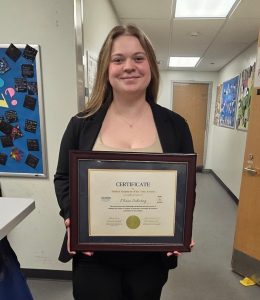 Congratulations to Dining Services Student Program Coordinator Maia Schwing for being named UConn’s Student Employee of the Year!
Maia’s journey with Dining Services shows just how much someone can grow through hard work and consistency. She started in Spring 2023 as a student worker at Gelfenbien, helping with cleaning tasks and light food prep while learning how everything worked behind the scenes. By the end of that semester, she had already stood out and was promoted to Supervisor for Fall 2023. Soon after, she stepped into an Assistant Student Manager role, assuming greater responsibility and supporting day-to-day operations.
In Spring 2024, Maia worked at both Buckley and Gelfenbien before becoming Student Manager for Fall 2024. While at Towers, she led a team of about 40 student employees and focused on improving training and fostering a positive, supportive work environment.
In Spring 2025, she was selected as a Student Program Coordinator (SPC), a role she has now held for nearly a year. In this position, Maia helps oversee student employment across Dining Services, supporting more than 1,000 student employees and working with student leaders to keep things running smoothly. She’s also helped show that these jobs are about more than just the basics—they’re a chance for students to build real skills and connections.
Maia is currently a senior studying mathematics and secondary mathematics education and will graduate at the end of this semester. She’ll be returning for a graduate year to pursue a master’s degree in curriculum and instruction while continuing in her SPC role. After UConn, she plans to stay in Connecticut and become a high school math teacher.